
In 1–2 Weeks: Apostille a Shareholder Agreement in Canada
In 1–2 Weeks: Apostille a Shareholder Agreement in Canada ! Shareholder agreement prepared for apostille Yes, a Canadian shareholder agreement can be apostilled once it carries a valid wet-ink notarization and gets submitted to the correct competent authority, either federal or provincial.

In 1–2 Weeks: Apostille a Shareholder Agreement in Canada
Yes, a Canadian shareholder agreement can be apostilled once it carries a valid wet-ink notarization and gets submitted to the correct competent authority, either federal or provincial. If the destination country belongs to the Hague Apostille Convention, that single apostille replaces consular legalization entirely. Next step: confirm where the agreement was signed or notarized, then prepare it for in-person notarization if it isn't already notarized correctly.
TL;DR:
- Canadian shareholder agreements require proper notarization and must be submitted to the correct provincial or federal authority to receive an apostille.
- Apostilles issued under the Hague Convention can replace consular legalization, but only if the document was notarized with a wet ink signature for verification.
- Sending a document to the wrong authority, relying on digital notarizations, or submitting photocopies instead of originals are common rejection causes.
- Processing times typically range from one to two weeks unless expedited services are used, with fees varying by province and courier costs adding to the expense.
- Confirm the destination country's acceptance of apostilles and the specific notarization and translation requirements before initiating the process to avoid delays.
Table of Contents
- Step-By-Step Process to Apostille a Shareholder Agreement in Canada
- Which Office Issues Apostilles in Canada?
- What Notarization and Formatting Does the Apostille Office Check?
- Processing Times, Fees, and Scheduling Advice
- Common Mistakes and a Final Verification Checklist
- How a Toronto Apostille Provider Handles Shareholder Agreements
- When to Handle This Yourself vs. Bring in a Specialist
- Get Your Shareholder Agreement Apostilled Without the Guesswork
- Official Authorities and Practitioner Resources to Check First
- Sources
- FAQ
Step-By-Step Process to Apostille a Shareholder Agreement in Canada
Getting a shareholder agreement ready for international use follows a fixed sequence. Skip a step, and the document usually comes back rejected rather than fixed on the spot.
- Prepare the document. Gather the original agreement or a certified true copy, along with any schedules or exhibits referenced inside it.
- Confirm signing authority. Check that the people who signed are the authorized signatories under the company's articles of incorporation or bylaws.
- Get a wet-ink notarization. A notary public must physically sign and seal the document. This signature is what the apostille actually authenticates.
- Pick the right authority. Decide between Global Affairs Canada and the relevant provincial office based on where the document was notarized or issued.
- Submit the request. Complete the authority's application form, attach identification and any certified translations, and select courier or expedited service if the timeline is tight.
- Receive the apostille. The authority attaches a certificate, called an allonge, directly to the document. Double check that its wording and format match what the destination country expects.
Pro Tip: Call or check the recipient's website before you pay for anything. Some foreign banks, registries, and courts accept a notarized copy without an apostille at all, and skipping that check wastes both time and fees.
Which Office Issues Apostilles in Canada?
Canada splits apostille authority between the federal government and individual provinces, and sending a document to the wrong one is the single most common cause of delay.
Global Affairs Canada issues apostilles for federal documents, including RCMP background checks and documents notarized in provinces and territories that haven't taken over the function themselves. Several provinces run their own competent authority instead:
- Ontario handles its own apostilles through the Official Documents Services (ODS).
- Alberta processes apostilles through the Ministry of Justice.
- British Columbia, Saskatchewan, and Quebec each maintain their own provincial authentication offices.
The decision rule is straightforward. A shareholder agreement notarized in Ontario goes to ODS, not to Global Affairs Canada. A federal document like an RCMP check goes to Global Affairs Canada regardless of where you're located. When you're unsure which office notarized your document falls under, check that authority's published guidance before shipping anything, since sending provincial records to the wrong federal or provincial office is a documented, avoidable rejection cause.
What Notarization and Formatting Does the Apostille Office Check?
An apostille doesn't authenticate the contents of your shareholder agreement. It authenticates the notary's signature and seal on that document, which changes what actually gets scrutinized during review.
Authorities check specific things before they'll issue anything:
- The notary's name and signature must appear on that authority's roster of registered notaries.
- The signature, stamp, and seal must be original, not a scan, fax, or photocopy.
- The document must be either a true original or a certified true copy issued directly by a notary, not a plain photocopy of a signed page.
Here's where a lot of corporate teams get tripped up: Remote Online Notarization, or RON, is generally not accepted for apostille purposes in Canada. RON might be perfectly legal for domestic use in provinces that allow it, but apostille authorities want physical, wet-ink signatures they can verify against a paper record on file. If your shareholder agreement was notarized remotely, plan on either a fresh in-person notarization or a certified true copy issued in person, because that digital notarization alone won't clear the authority's checks.
Processing Times, Fees, and Scheduling Advice
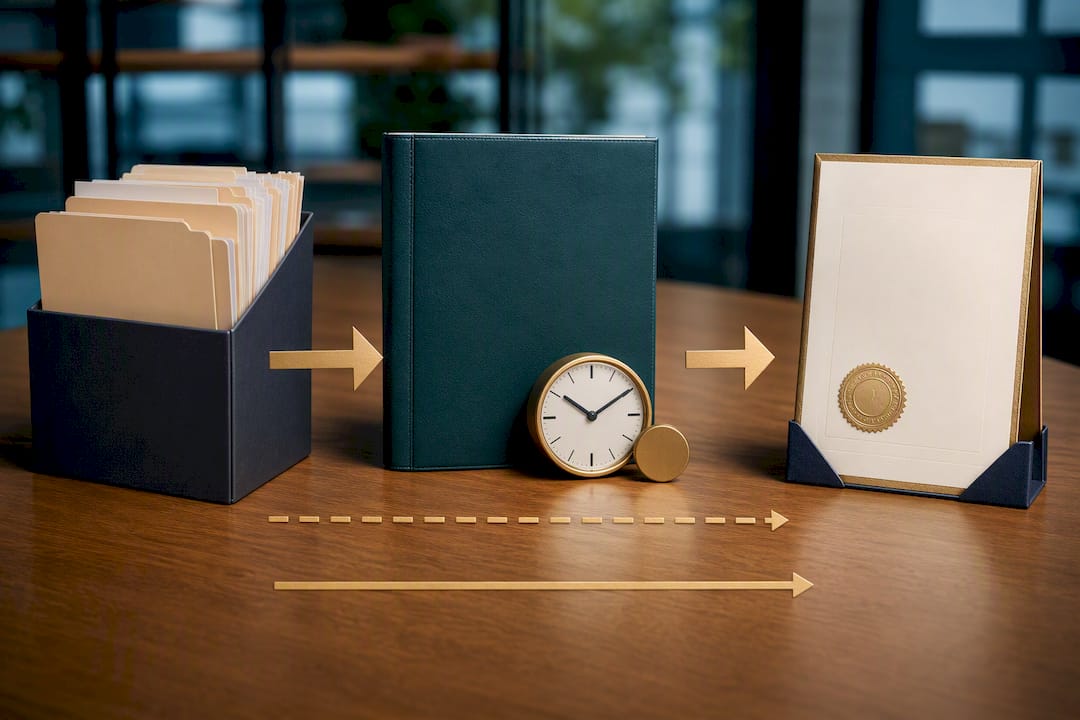
Timelines and costs vary by which office handles your file, so building in buffer matters more than chasing the fastest quoted turnaround. Alberta's competent authority charges $25 per document, and other provinces publish their own separate fee schedules that don't always match.
A few things stretch out both the timeline and the total cost:
- Courier shipping to and from the authority's office, especially if you're not local to where the office sits.
- Certified translations, required whenever the destination country doesn't accept English or French.
- Notarization fees charged separately from the apostille fee itself.
For a typical corporate closing or foreign filing, give yourself at least one to two weeks of lead time before the document is actually needed, longer if translation is involved. Expedited slots exist at several offices, but they move faster when the notarization is clean and the application form is filled out correctly the first time.
Common Mistakes and a Final Verification Checklist
Most rejections trace back to a handful of repeat mistakes, not obscure technicalities.
The biggest ones: sending a document to the wrong competent authority, using a notary who isn't registered with that authority, relying on a digital-only notarization, and submitting a photocopy instead of an original or a proper certified true copy.
Before you submit anything, run through this:
- Confirm the destination country actually accepts apostilles under the Hague Convention.
- Verify the notary's identity and registration status with the authority you're sending to.
- Check that you're sending the correct, fully executed version of the shareholder agreement.
- Include certified translations if the recipient country requires a language other than English or French.
Pro Tip: When you're not sure a document even needs an apostille, ask the recipient authority or embassy directly before you pay for notarization and processing. It's a five-minute call that can save you a week.
How a Toronto Apostille Provider Handles Shareholder Agreements
A Toronto-based apostille provider can process Ontario apostille filings, notarization, and certified true copies for corporate documents including shareholder agreements. Document review typically happens before submission to ensure that the notary is registered with the appropriate authority and that the correct competent authority receives the file the first time. Expedited options may be available for tight closing deadlines, sometimes with all-in pricing that includes government fees upfront.
When to Handle This Yourself vs. Bring in a Specialist
If your timeline has room and the jurisdiction is obvious, doing this in-house is manageable. Cross-border closings and hard deadlines change that math fast. My priority order for corporate secretaries: confirm the recipient's actual requirement first, then lock in notarization, then pick your authority. A specialist earns its fee the moment any one of those steps is unclear.
— Ken
Get Your Shareholder Agreement Apostilled Without the Guesswork
Speedyapostilleservices is the alternative to piecing this process together yourself, one call to Global Affairs Canada and one trip to a notary at a time. Filing happens directly at the Ontario ODS counter, with government fees included in the upfront quote so there's no surprise invoice after your documents are already in transit.
For a shareholder agreement, that means notarization or a certified true copy handled in-house by a commissioned Ontario Notary, correct routing to whichever authority actually covers your document, and a Next-Day Priority or Same-Day Rush option when a closing date won't move. Notarization and certified true copies are charged per document, with additional documents priced on a sliding scale as volume increases. Start by requesting a quote through the services page, and expect document review, authority routing, and a typical turnaround measured in days rather than weeks.
Official Authorities and Practitioner Resources to Check First
Confirm requirements directly at the source before you submit anything. Start with Global Affairs Canada's authentication guidance if your document is federal or from a province without its own authority, or check Québec's apostille page if the document originated there. For broader drafting context on corporate agreements, Oldham Law PLLC's guide to agreement drafting covers considerations worth reviewing before a shareholder agreement heads abroad. A practitioner overview like The Notary Guy's apostille guide fills in additional step-by-step detail.
- Global Affairs Canada: federal documents and provinces without their own authority.
- Provincial offices (Ontario ODS, Alberta, Québec): documents issued or notarized locally.
- Practitioner guides: procedural detail and common pitfalls.
Sources
- Authentication of documents - Global Affairs Canada
- Document authentication for other jurisdictions or countries - Alberta
- About apostille | Gouvernement du Québec
FAQ
Can I Get an Apostille on Canadian Documents?
Yes. Canada joined the Hague Apostille Convention effective January 11, 2024, and apostilles are now issued by Global Affairs Canada or the relevant provincial authority depending on where the document was issued or notarized.
How Long Does It Take to Get Documents Apostilled in Canada?
Processing times vary by authority and whether you choose standard or expedited service. Building in one to two weeks of lead time for a standard request is realistic, while services like Speedyapostilleservices' Next-Day Priority and Same-Day Rush options can compress that significantly for urgent filings.
Is a Shareholder Agreement Legally Binding?
Yes, a properly executed shareholder agreement is a legally binding contract between the signing parties under Canadian corporate law. Notarization and apostille don't create that binding effect. They authenticate the signatures and notary seal so the document is recognized abroad.
Can I Get an Apostille in Manitoba?
Manitoba documents currently fall under Global Affairs Canada's jurisdiction rather than a separate provincial authority, unlike Ontario, Alberta, British Columbia, Saskatchewan, and Québec, which each issue their own. Confirm current coverage on the federal authority's site before submitting, since jurisdictional assignments have shifted as provinces take on the function.