
Canadian Name Change: Apostille It in 8 Steps and Avoid Rejection
Canadian Name Change: Apostille It in 8 Steps and Avoid Rejection ! Certified name-change document with attached apostille Yes, a Canadian name change document can be apostilled.
Canadian Name Change: Apostille It in 8 Steps and Avoid Rejection
Yes, a Canadian name change document can be apostilled. Send a certified paper copy to the competent authority responsible for the province or federal office that issued or notarized it. If the destination country has not joined the Hague Apostille Convention, an added step of embassy or consulate legalization may still apply after the Canadian apostille is issued.
TL;DR:
- Canadian name change documents qualify for an apostille if they are certified copies, not photocopies, and originate from the issuing court or civil registry.
- The apostille process is handled by the competent authority where the document was issued or notarized, typically a provincial office or Global Affairs Canada at the federal level.
- Allow at least 7 to 10 business days for processing, plus additional time for courier transit and possible notarization of supporting documents.
- Non-Hague countries require an embassy or consulate legalization after Canadian apostille authentication before the document is recognized internationally.
- Common errors, such as submitting photocopies or sending documents to the wrong office, account for most rejections and can be avoided with careful verification.
Table of Contents
- What Is a Name Change Apostille and Why Does It Matter?
- Which Name Change Documents Qualify for an Apostille?
- Who Issues Apostilles in Canada, and Which Office Should You Use?
- How Do You Apostille a Name Change Document Step by Step?
- How Long Does It Take and What Does It Cost?
- What If Your Destination Country Isn't a Hague Member?
- What Mistakes Cause Apostille Applications to Get Rejected?
- A Practical Workflow for Avoiding Rejections
- Let Speedy Apostille Services Handle the Paperwork for You
- Where to Verify Apostille Details Yourself
- Sources
- FAQ
What Is a Name Change Apostille and Why Does It Matter?
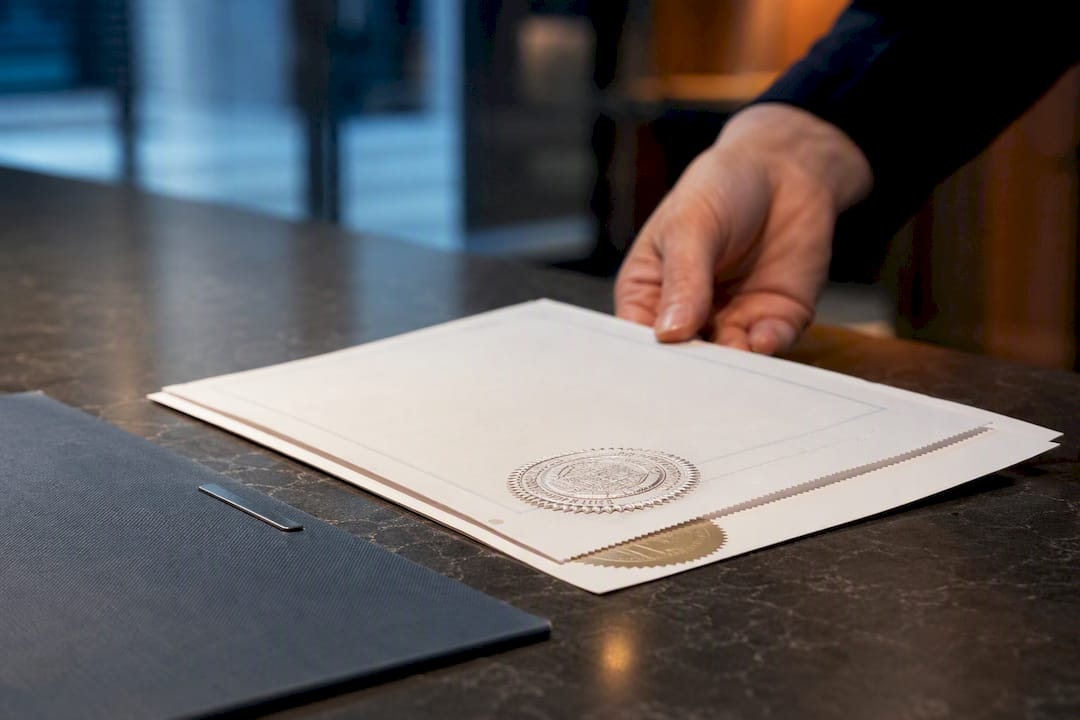
An apostille is a certificate called an allonge. It is a separate paper attached to your authenticated document, not a stamp printed directly on it. The allonge confirms that the signature and seal on your name change document are genuine, so a foreign authority can accept it without extra verification.
Canada joined the Hague Apostille Convention, and the change took effect on January 11, 2024, according to the Government of Canada's announcement. Before that date, Canadian documents needed a longer chain of authentication and embassy legalization for almost every country. Now, if the destination country is a member, the apostille alone is enough.
Documents authenticated under the old process still work where they were already accepted, but any new request now goes through the apostille system instead of the older red-seal authentication method.
Which Name Change Documents Qualify for an Apostille?
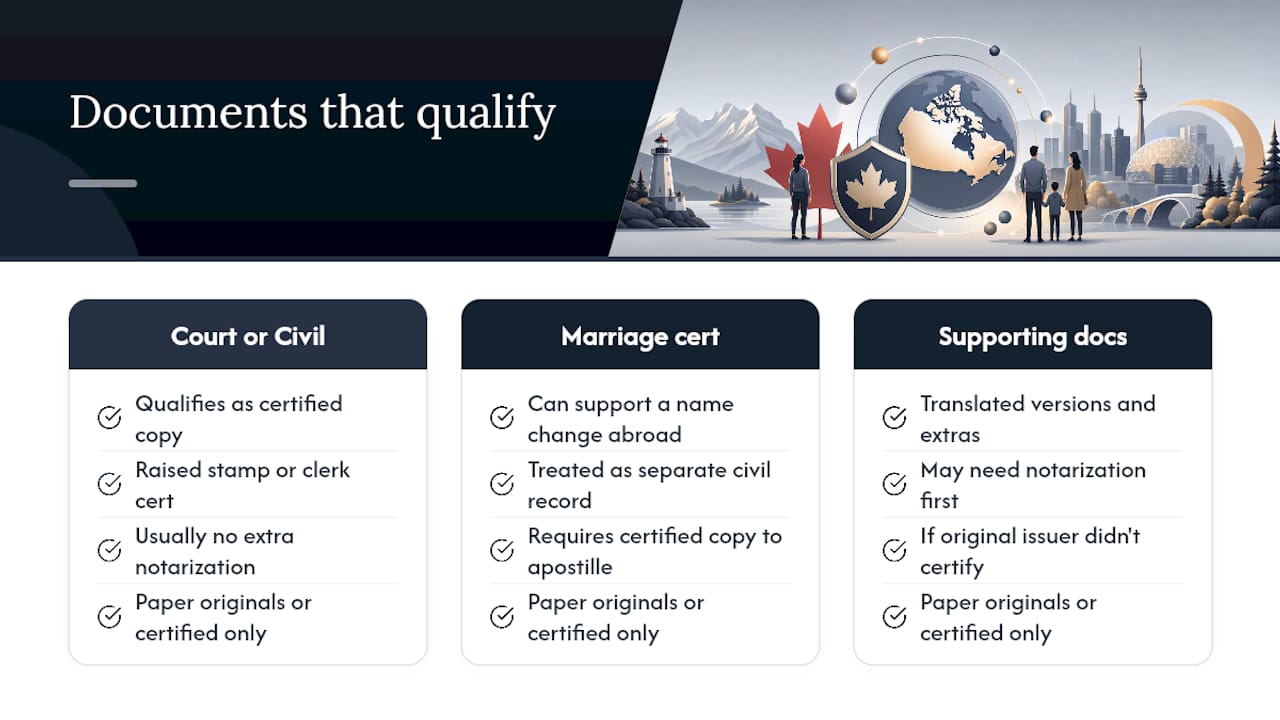
A court-issued name change order and a civil change-of-name certificate both qualify, as long as they are presented as certified copies, not photocopies. A certified copy from a court clerk typically carries a raised stamp or clerk certification, and that feature is usually what makes it eligible for apostille without any additional notarization.
Marriage certificates can also support a name change abroad in some cases, though they follow their own apostille path since they are a separate civil record.
Two format rules apply across the board. Paper originals or certified copies are the only accepted format. Scanned copies, PDFs, and other digital files cannot be apostilled under the government's authentication rules on document format. Some supporting paperwork, like a translated version of a name change order, may need notarization first if the original issuing body did not certify it directly.
Who Issues Apostilles in Canada, and Which Office Should You Use?
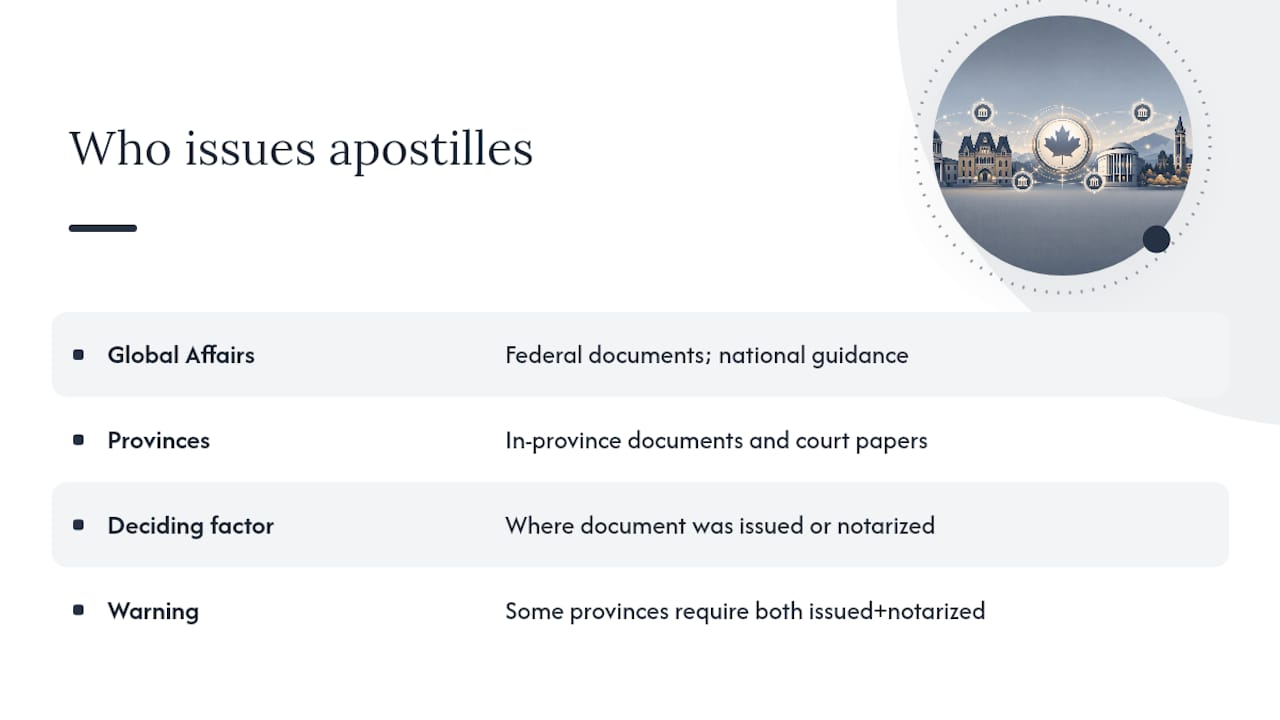
Global Affairs Canada issues apostilles for federal documents and sets the national guidance most provinces build their own processes around. Provinces, though, handle a large share of name change paperwork themselves, since that's where most court orders and civil registry certificates originate.
Alberta, Ontario's Official Documents Services (ODS), and British Columbia each act as a competent authority for documents issued or notarized within their own jurisdiction. That's the deciding factor: where the document was issued, or where it was notarized, not where you currently live.
Here's the catch that trips people up. Some provinces will only authenticate a notarized document if it was also issued in that same province. A notarized copy of an Alberta court order signed by an Ontario notary, for example, might get bounced back if you send it to the wrong office. Always confirm the rule for your specific document before mailing anything.
How Do You Apostille a Name Change Document Step by Step?
Following a fixed order saves you from the most common delays.
- Confirm with the foreign institution, school, bank, or government office that an apostille is actually required. Many accept a plain certified copy with no apostille at all.
- Check whether the destination country is a Hague member using a country checker tool.
- Request a certified or court-certified paper copy from the issuing court or civil registry.
- Get notarization for any supporting documents that were not directly certified by the issuing office.
- Complete the competent authority's apostille or authentication request form, and name the destination country on it.
- Attach payment proof and a prepaid, tracked return envelope, along with a clear cover sheet listing every document enclosed.
- Mail the package by tracked courier to the correct competent authority.
- When your document returns, check the allonge for accuracy, then scan and store a backup before using the original abroad.
Pro Tip: Photograph both sides of your certified copy before you mail it. If the package is lost in transit, you'll have proof of what was sent and a starting point for reissuing the certified copy quickly.
How Long Does It Take and What Does It Cost?
Provincial guidance generally recommends allowing at least 7 to 10 business days for processing, though timelines vary by office and by how busy that office is when your package arrives. Courier transit time and any request for a fresh certified copy from a court or registry add days on top of that window.
Budget for more than the apostille fee itself:
- Certified copy fees from the issuing court or civil registry
- Notarization fees for any supporting documents
- Embassy or consulate legalization fees if the destination country is not a Hague member
- Rush or expedited service surcharges where offered
Most delays trace back to one of two causes: the applicant sent the package to the wrong provincial office, or a required field, like the destination country, was left blank on the request form. Both are avoidable with a five-minute check before you mail anything.
What If Your Destination Country Isn't a Hague Member?
Some countries have not joined the Apostille Convention, and Canadian documents headed there need one more step. After you obtain the apostille or authentication in Canada, the document still requires legalization by that country's embassy, high commission, or consulate located in Canada.
Each foreign mission sets its own rules, so check its consular instructions directly. Some require a certified translation, others need an in-person appointment, and fees vary widely. The sequence stays fixed either way: Canadian apostille or authentication first, foreign embassy legalization second. Skipping ahead to the embassy before your document is authenticated in Canada will only get it sent back. A full country-by-country breakdown is worth bookmarking if you're dealing with a non-member country.
What Mistakes Cause Apostille Applications to Get Rejected?
Run through this before your package leaves the house:
- Certified or court-certified copy included, not a photocopy or scan
- Original signature and seal visible and undamaged
- Destination country clearly named on the request form
- Package addressed to the correct provincial or federal competent authority
- Prepaid, tracked return shipping included
The most common rejection reasons are almost identical across provinces: photocopies sent instead of certified copies, staples or lamination that damage the seal or the allonge, submissions sent to the wrong provincial office, and forms missing the destination country entirely.
A Practical Workflow for Avoiding Rejections
Most rejections come down to skipped verification, not bad luck. My workflow is simple: confirm the destination actually requires an apostille, pull a certified copy straight from the court or registry, pre-check whether notarization applies to any supporting paper, and ship everything by tracked courier.
DIY works fine if you have time to spare and a single, straightforward document. Choose expedited professional handling when you're facing a visa deadline, a foreign employer's start date, or a document with unusual notarization requirements that increase the odds of a routing mistake.
— Ken
Let Speedy Apostille Services Handle the Paperwork for You
Chasing down the right provincial office, formatting a request form correctly, and tracking a mailed package back and forth takes real time, and one missing detail sends you to the back of the line. Speedy Apostille Services reviews your name change document, verifies it meets format and notarization requirements, and submits it to the correct competent authority on your behalf.

Pricing is all-in, meaning government fees are included in the quote upfront rather than added later, and turnaround times are typically short after your document is received. If you're working against a deadline for a visa, a foreign employer, or a school abroad, that difference matters. Start your order or ask a question through the Speedy Apostille Services request page and get a clear timeline before you commit anything to the mail.
Where to Verify Apostille Details Yourself
Cross-check any requirement against the Global Affairs Canada authentication portal, your provincial competent authority's page, and the official Apostille Convention announcement for policy details.
Sources
- Authentication of documents - Global Affairs Canada
- Authenticate your documents - Global Affairs Canada (Before you start)
- Alberta
- Apostille Convention - Province of British Columbia
- Canada joins Apostille Convention to facilitate use of public documents abroad - Government of Canada
FAQ
Can I get an apostille on a Canadian name change document?
Yes. A certified copy of a court-issued name change order or civil change-of-name certificate can be apostilled once sent to the correct competent authority for the issuing jurisdiction.
What documents do I need to change my name for international use?
You need a certified copy of the court order or civil registry certificate showing the legal name change, not a photocopy, since only original certified paper documents are eligible for apostille.
How long does it take to get an apostille in Canada?
Provincial guidance suggests allowing at least 7 to 10 business days for processing, plus courier time and any delay from ordering a fresh certified copy.
How much does an apostille cost in Canada?
Costs include the apostille or authentication fee itself, certified copy fees from the court or registry, notarization fees where required, and embassy legalization fees if your destination country is not a Hague member.
What happens if my destination country isn't part of the Apostille Convention?
Your document will need embassy or consulate legalization after it receives the Canadian apostille, since non-member countries don't recognize the apostille on its own.