
Avoid Rejection When Apostilling a Long Form Canadian Birth Certificate
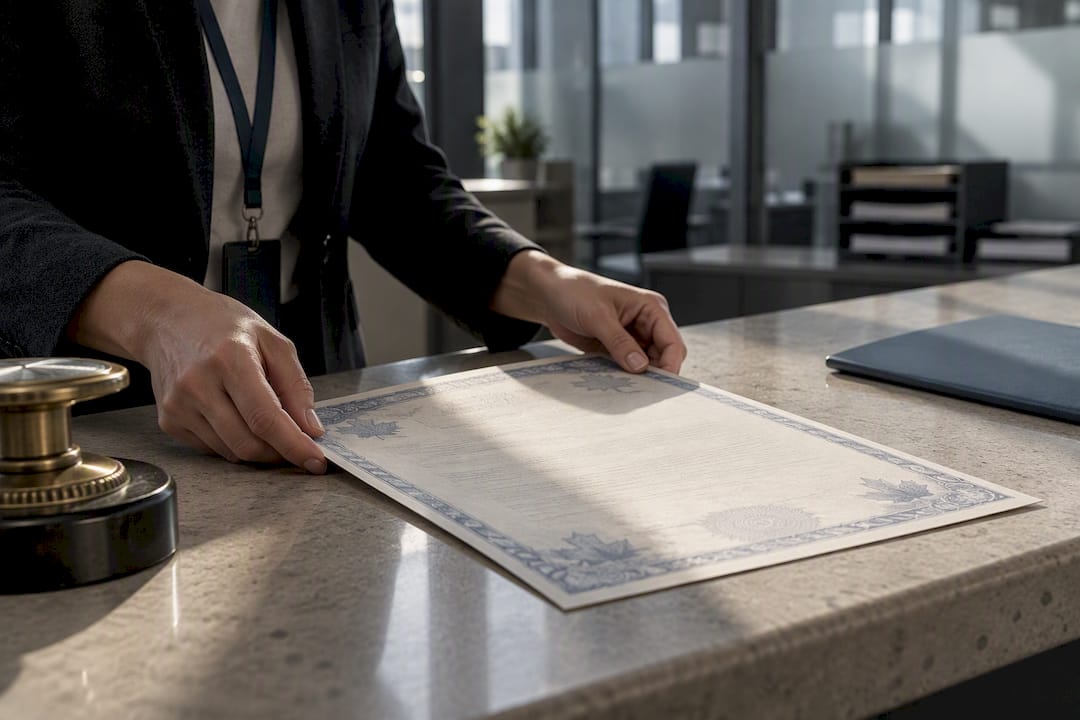
Avoid Rejection When Apostilling a Long Form Canadian Birth Certificate ! Long-form Canadian birth certificate awaiting apostille Yes, a long-form Canadian birth certificate can receive an apostille.
Avoid Rejection When Apostilling a Long Form Canadian Birth Certificate
Yes, a long-form Canadian birth certificate can receive an apostille. Canada joined the Hague Apostille Convention, and provincial authentication programs now process these requests directly. Your first move is simple: confirm you hold a certified, long-form (unabridged) copy from your provincial vital statistics office, not a short-form abstract, before you contact Global Affairs Canada or your provincial authority.
TL;DR:
- Most provinces require the certified long-form birth certificate with an original signature, embossed seal, and recent issue date for apostille processing.
- Provincial authentication programs are the primary authorities for apostilling birth certificates, except in some cases where federal agencies may be involved.
- Order the document directly from your issuing province’s vital statistics office and ensure it is undamaged and unlaminated before submitting.
- Delays often result from submitting a short-form certificate, using an expired copy, or failing to include the necessary signatures and seals.
- A professional filing service can streamline the process, prevent common errors, and typically deliver apostilles within 2 to 3 days for urgent requests.
Table of Contents
- What Is an Apostille, and Why Do Foreign Authorities Want the Long-Form Version?
- Long-Form vs. Short-Form: How Do You Know You Have the Right One?
- Which Government Office Issues Apostilles on Canadian Birth Certificates?
- How Do You Get a Long-Form Certificate Apostilled, Step by Step?
- How Long Does It Take, and What Usually Causes Delays?
- Do You Need a Translation, and When Should You Get One?
- What Should Be in Your Final Document Package Before You Send It?
- What Patterns Show Up Most in Apostille Requests?
- Get Your Long-Form Birth Certificate Apostilled Without the Back-and-Forth
- Sources
- FAQ
What Is an Apostille, and Why Do Foreign Authorities Want the Long-Form Version?
An apostille is a one-page certificate that authenticates the signature and seal on your birth certificate. It does not verify the facts printed on the document itself. Canada's apostille system took effect on January 11, 2024, and the certificate is now recognized in more than 120 member countries without the older embassy legalization step.
Foreign authorities usually want the long-form because it lists the information they need to verify identity or family relationships: parents' names, place of birth, registration number, and the registrar's original signature. Common situations where the long-form gets requested include:
- Citizenship applications by descent, especially Italian citizenship claims
- Marriage registration in another country
- School or university enrollment abroad
- Legal proceedings, inheritance, or property matters overseas
Long-Form vs. Short-Form: How Do You Know You Have the Right One?
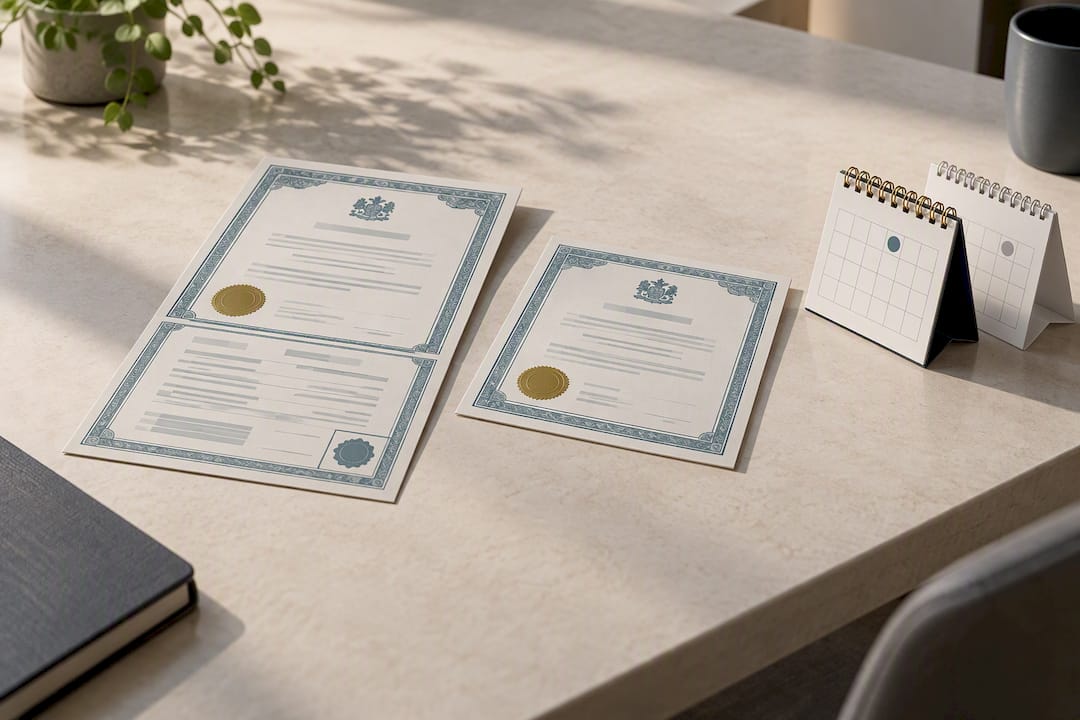
A long-form certified copy includes the full registration record: both parents' names, place and date of birth, the registration number, and the registrar's signature with a raised or embossed seal. A short-form (sometimes called an abstract or wallet-sized certificate) strips most of that detail and simply confirms the name, date, and place of birth.
Check three things before you submit anything:
- A raised or stamped seal from the vital statistics office
- An original registrar signature, not a photocopy or scan
- A recent issue date, since many foreign authorities require certificates issued within the past 6 to 12 months
Hospital keepsake certificates, laminated souvenir copies, and plain photocopies will not work. They carry no registrar signature and no seal, so there is nothing for an apostille to authenticate.
Pro Tip: If your destination country has a stated freshness window, order a brand-new certified copy rather than reusing an old one. Reordering later costs more time than ordering right the first time.
Which Government Office Issues Apostilles on Canadian Birth Certificates?
The competent authority depends on which province or territory issued your birth certificate. There is no single national counter for this. Global Affairs Canada authenticates certain federal documents, but most birth certificates fall under provincial authentication programs.
Ontario runs its program through the Official Documents Services, while British Columbia's apostille program confirms that provincial offices remain the operational contact point for documents issued in their jurisdiction, even after the federal government joined the Convention. Other provinces run comparable programs with their own forms, fees, and mailing addresses.
Before you submit anything:
- Identify the province that issued your certificate, not the province where you currently live
- Search that province's official government site for its authentication or apostille page
- Confirm the current mailing address and submission form directly on that page, since addresses and forms occasionally change
How Do You Get a Long-Form Certificate Apostilled, Step by Step?
The process runs in a fixed order. Skipping a step or doing them out of sequence is the fastest way to add weeks to your timeline.
- Order a certified long-form copy. Request it directly from your issuing province's vital statistics office. Most provinces require government photo ID and basic details like your full name, date of birth, and parents' names to process the request.
- Check the copy's condition. Confirm it carries an original signature, an embossed or raised seal, and a recent issue date if your destination requires one.
- Complete the authentication or apostille request form for the correct provincial authority, and include the correct payment method along with a prepaid, trackable return envelope.
- Submit your package, either at a walk-in counter where available or by mail, and keep your receipt or tracking number until the apostilled document arrives.
Pro Tip: Never staple or notarize the original certified copy before sending it for apostille. Government guidance is explicit on this point: staple holes and unnecessary notary stamps can force a rejection and restart the clock.
How Long Does It Take, and What Usually Causes Delays?
Processing time varies by province and by submission method. Some provincial offices offer same-day counter service for walk-in requests, while mailed submissions typically take longer and depend on both processing queues and return shipping.
Fees generally break into two categories: the government authentication or apostille fee itself, and any optional courier or expedite charges you add on top. Confirm exact amounts on your province's official page before you send payment, since fee schedules do change.
Most rejections trace back to a small set of avoidable mistakes:
- Submitting a short-form certificate when the destination requires a long-form
- Sending a certified copy that is too old for the receiving country's freshness rule
- Missing signatures or seals on the certified copy
- Incorrect payment amounts or a missing prepaid return envelope
Practitioners also flag a less obvious trap: some jurisdictions require an extra certification step, such as exemplification, before the apostille can even be issued. Skipping that link in the chain is a common source of delay.
Do You Need a Translation, and When Should You Get One?
Get the apostille first, then arrange translation. Apostille an original certified copy before translating it, because the apostille authenticates the original document, not a translated version. Practitioners warn that translating first is a frequent cause of rejection, since the receiving authority may reject an apostille attached to the wrong version of the document.
Whether you need anything beyond the apostille depends on where your certificate is going:
- If the destination is a Hague Convention member, the apostille alone is generally sufficient
- If it is not a member country, you may need the apostille plus additional embassy or consular legalization
- Always check the receiving authority's own instructions for freshness windows and required translator qualifications
You can confirm a destination country's status using a Hague Convention country checker before you spend money on translation services.
What Should Be in Your Final Document Package Before You Send It?
Build your package around five essentials before sealing the envelope.
- The certified long-form original, undamaged and unstapled
- The completed authentication or apostille request form for your province
- Correct payment in the accepted method
- A prepaid return envelope with tracking, addressed exactly as your certificate shows
- A photocopy for your own records, kept separate from the originals
Do not staple or fold the certified copy, and use a secure courier rather than standard mail whenever the document is time-sensitive. Double-check that your destination country is a Hague member and that you know whether a translator qualification or extra exemplification step applies before the package leaves your hands. A document checklist tool can help you confirm nothing is missing.
What Patterns Show Up Most in Apostille Requests?
The same two mistakes account for most delays we see: people order a short-form certificate when the destination wants the long-form, and people submit a certified copy that is too old for the receiving country's freshness rule. Both are avoidable with one phone call or one careful read of the destination's instructions before you order anything.
Handling this yourself works fine for a single, straightforward document with no tight deadline. It gets harder when you are coordinating multiple documents across provinces, chasing a visa or citizenship deadline, or dealing with a receiving authority that has unusual translation requirements. That is when a professional filing service earns its fee, mainly by catching the sequencing errors before they cost you a resubmission.
— Ken
Get Your Long-Form Birth Certificate Apostilled Without the Back-and-Forth
A professional apostille filing service can handle common failure points like wrong certificate types, missing seals, and confusing provincial paperwork. Some services file Ontario documents directly at the Official Documents Services counter, include government fees upfront to avoid surprise add-ons, and may correct filing errors to prevent delays.

Speedyapostilleservices offers Ontario Apostille, notarization, certified true copies, and consular legalization, along with Next-Day Priority and Same-Day Rush options for readers on a deadline. Notarization and certified true copies run $35 CAD per document, and courier delivery is available for the full round trip. The company reports a typical turnaround of 2 to 3 days and has collected more than 1,000 positive client reviews. If your long-form certificate needs to move fast, check current pricing and service tiers on the pricing page and get a quote before you mail anything yourself.
Sources
- Authentication of documents - Global Affairs Canada
- Apostille Convention - Province of British Columbia
- Canada joins Apostille Convention to facilitate use of public documents abroad
Always confirm current addresses, forms, and fee amounts on these official pages immediately before sending your documents.
FAQ
Can I Apostille My Birth Certificate in Canada?
Yes. Since Canada joined the Hague Apostille Convention, provincial authentication programs issue apostilles for certified birth certificates from their jurisdiction. You need a certified long-form copy, not a photocopy, to start the process.
Does Canada Have a Long-Form Birth Certificate?
Yes. Provinces issue both a long-form (unabridged) certified copy, which lists parents' names and full registration details, and a short-form abstract with limited information. Most foreign authorities and apostille requests require the long-form version.
Can I Get an Apostille on My Birth Certificate?
You can, as long as it's a certified long-form copy from the issuing province with an original signature and seal. Photocopies, hospital keepsakes, and expired certified copies typically get rejected by the competent authentication authority.
How Long Does an Apostille Take in Canada?
Processing time depends on the province and submission method, with some offices offering faster in-person counter service than mail-in requests. Speedyapostilleservices reports a typical turnaround of 2 to 3 days for its expedited filing options, though standard mail processing through government offices generally takes longer.