
Bylaws Apostille Canada: A Guide for Individuals & Businesses
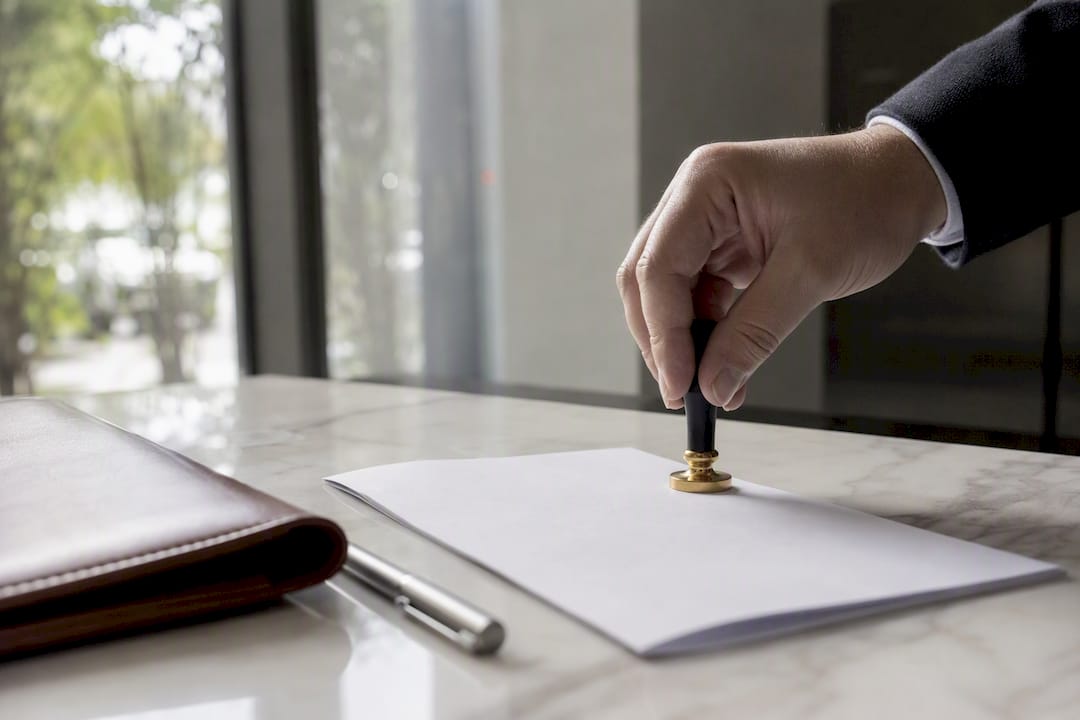
Bylaws Apostille Canada: A Guide for Individuals & Businesses ! Hand stamping legal document with seal Yes, bylaws can get an apostille in Canada, but only if they meet the right conditions first.
Bylaws Apostille Canada: A Guide for Individuals & Businesses
Yes, bylaws can get an apostille in Canada, but only if they meet the right conditions first. Municipal bylaws typically qualify as public documents and move through the process directly. Private corporate bylaws usually need notarization before any authority will touch them. Here is what to do next:
- Identify who issued the bylaw and in which province or territory it originated.
- Confirm whether it counts as a public document or a private corporate record.
- Submit to the correct competent authority, or get it notarized first if it is a corporate bylaw.
Global Affairs Canada and the provincial authentication offices both maintain verification pages, and Speedyapostilleservices reviews documents before submission to catch routing errors early.
Key Takeaways
Getting a bylaw apostilled in Canada works when you correctly identify the document type, notarize corporate bylaws first, and route the submission to the authority that matches where the document was issued.
| Point | Details |
|---|---|
| Confirm document type first | Municipal bylaws are public documents; corporate bylaws need notarization before submission. |
| Match authority to jurisdiction | Submit to Global Affairs Canada or the province that issued or notarized the bylaw. |
| Certified copies only | Photocopies get rejected; request certified true copies or notarized versions. |
| Non-Hague destinations need extra steps | Use the two-step authentication and consular legalization process instead of an apostille alone. |
| Speedyapostilleservices handles the review | Document review, routing, and courier delivery with all-in pricing and 1 to 7 day turnaround. |
Table of Contents
- Which Canadian Authorities Issue Apostilles for Bylaws?
- Are Bylaws Eligible for an Apostille in Canada?
- How Do You Get an Apostille on Bylaws Step by Step?
- What if the Destination Country Isn't Part of the Hague Convention?
- How Long Does It Take and What Does It Cost?
- How Do You Verify an Apostille on a Bylaw?
- How Speedy Apostille Services Handles Bylaws Apostille Requests
- Sources
- FAQ
Which Canadian Authorities Issue Apostilles for Bylaws?
Canada split apostille authority between the federal government and select provinces after joining the Hague Apostille Convention. Global Affairs Canada handles documents from provinces and territories without their own authentication service, plus most federally issued paperwork. British Columbia, Alberta, and Saskatchewan run their own authentication services for documents issued or notarized within their borders.
The rule of thumb is simple: the authority that handles your bylaw depends on where it was issued or notarized, not where you live now.
- Global Affairs Canada covers documents from provinces without dedicated services, plus certain federal records.
- Province of British Columbia authenticates BC-issued or BC-notarized documents.
- Province of Alberta handles bylaws notarized or issued within Alberta.
- Province of Saskatchewan processes Saskatchewan-based documents.
- Ontario also runs its own authentication service for Ontario-issued paperwork.
Sending a document to the wrong office is one of the most common causes of delay, so check the issuing jurisdiction before you mail anything.
Are Bylaws Eligible for an Apostille in Canada?
It depends entirely on what kind of bylaw you have. Municipal or government bylaws, like a city zoning bylaw or a regional council resolution, are public documents issued by a government body. They generally qualify for apostille without extra steps, since a public official already signed and sealed them.
Private corporate bylaws are different. A corporation's internal bylaws are not government records, so most authorities treat them as private documents that need notarization before they become eligible. A notary public certifies the copy is genuine, and that notarial certificate is what actually gets the apostille, not the bylaw text itself.
Before submitting, gather:
- An original or certified true copy of the bylaw, not a plain photocopy.
- A notarization from a licensed notary public, where the document is corporate.
- Corporate registry confirmation if the receiving authority asks for proof the company exists in good standing.
Rejections usually trace back to one of three things: an uncertified copy, missing notarization, or a submission sent to a jurisdiction that never issued or notarized the document.
How Do You Get an Apostille on Bylaws Step by Step?
The process for a bylaws apostille in Canada follows a fairly consistent sequence, whether you are dealing with a municipal record or a corporate one.
- Confirm the document type. Decide if your bylaw is a public municipal record or a private corporate one, since that determines whether notarization comes first.
- Get a certified true copy. Request one from the issuing municipality, or have a notary certify the corporate bylaw copy.
- Notarize corporate bylaws. A notary public attests to the authenticity of the signature and copy, which becomes the document the apostille actually authenticates.
- Add corporate registry confirmation if required. Some receiving authorities or destination countries want proof the corporation is registered and active.
- Identify the correct competent authority. Match the document's issuing province to Global Affairs Canada or the relevant provincial office.
- Submit the package. Mail-in and drop-off options both exist, depending on the authority; some offer expedited service.
- Track and verify. Once returned, confirm the apostille details before using the document abroad.
Government guidance consistently flags the same preparation basics: correct copy format, proper notarization, and certified translations when the destination country requires them. Some offices, including Ontario's authentication service, still expect physical hard copies with original wet-ink signatures rather than digital scans, so don't assume a PDF will work.
Pro Tip: Check that your notary's registration is active with the issuing province before you pay for notarization. An expired or improperly registered notary is one of the fastest ways to get a bylaw rejected at the authentication stage.
If your timeline is tight, ask about expedited handling, or have a service provider review the package before submission so jurisdiction and notarization problems get caught before, not after, you mail it in.
What if the Destination Country Isn't Part of the Hague Convention?
Not every country signed on to the Hague Apostille Convention, and for those destinations, an apostille alone won't be accepted. You need the older two-step process instead: authentication by a Canadian competent authority, followed by legalization at the destination country's embassy or consulate in Canada.
- Check whether the destination country is a Hague member using an apostille country checker before you start.
- Contact the relevant embassy or consulate to confirm translation requirements, extra affidavits, and appointment scheduling.
- Ask about consular fees separately from the federal or provincial authentication fee.
Embassy requirements vary widely from country to country, so confirm this early. A bylaw destined for a non-Hague country can take considerably longer than one going to a member state.
How Long Does It Take and What Does It Cost?
Processing times shift depending on which authority handles your bylaw and whether you submit by mail or in person.
- Federal processing through Global Affairs Canada often runs longer during high-volume periods than provincial offices handling smaller regional volumes.
- Provincial authorities in BC, Alberta, and Saskatchewan tend to move faster for documents issued locally, though in-person drop-off is usually quicker than mail-in.
- Fees vary by authority and by document or notarization type, so confirm the current rate directly on the competent authority's page rather than relying on a quoted range elsewhere.
- Factor in courier time both ways, plus translation costs if your destination country requires a certified translation.
Concierge services that coordinate notarization and submission on your behalf can shorten the total timeline, particularly when you are unfamiliar with which office to use.
How Do You Verify an Apostille on a Bylaw?
Once your bylaw comes back with an apostille attached, check it before relying on it internationally.
- Confirm the issuing authority's name matches the office you submitted to.
- Check the date, signature, and any certificate number against what the authority told you to expect.
- Look for an attached apostille sheet or stamp, not just a loose page that could be swapped out.
- Use Global Affairs Canada's verification tools or the relevant provincial verification page to confirm authenticity.
If anything looks off, contact the issuing authority immediately and keep your originals safe. Document forensics experts note that digital authentication verification has become a serious concern as fraud attempts grow more sophisticated, which is exactly why physical checks against the issuing authority still matter.
Common Issues We See With Bylaw Apostilles
Recurring problems: bylaws mailed to the wrong provincial office, corporate bylaws submitted without notarization, and photocopies sent instead of certified true copies.
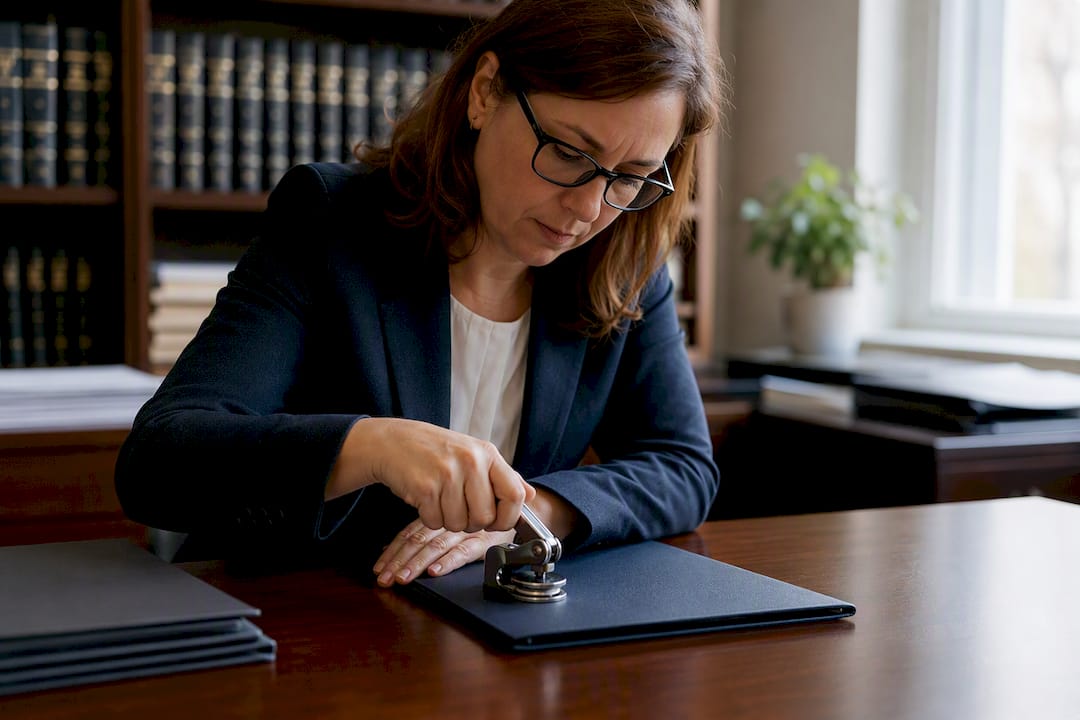
Pro Tip: Have someone review your documents for jurisdiction and notarization before you submit, not after.
An apostille confirms a signature or seal is genuine. It does not confirm the bylaw's content is legally sound, so get that reviewed separately if it matters for your situation.
How Speedy Apostille Services Handles Bylaws Apostille Requests
Speedyapostilleservices reviews your bylaw before submission, confirms whether notarization is needed, routes it to the correct competent authority, and tracks it through secure courier delivery back to you. That review step alone catches most of the jurisdiction and notarization mistakes that cause rejections and resubmissions.
Turnaround typically runs 1 to 7 days depending on the tier you choose, standard, expedited, or rush, and pricing is all-in from the start. Government fees get built into your quote upfront, so there are no surprise charges once your bylaw is already in process. If you are in the Toronto area and need documents handled in person, same-day service is available across the GTA. Otherwise, submit your bylaw and supporting documents for review through the Speedy Apostille Services site and get a clear quote before you commit to anything.
Sources
- Authentication of documents (Global Affairs Canada)
FAQ
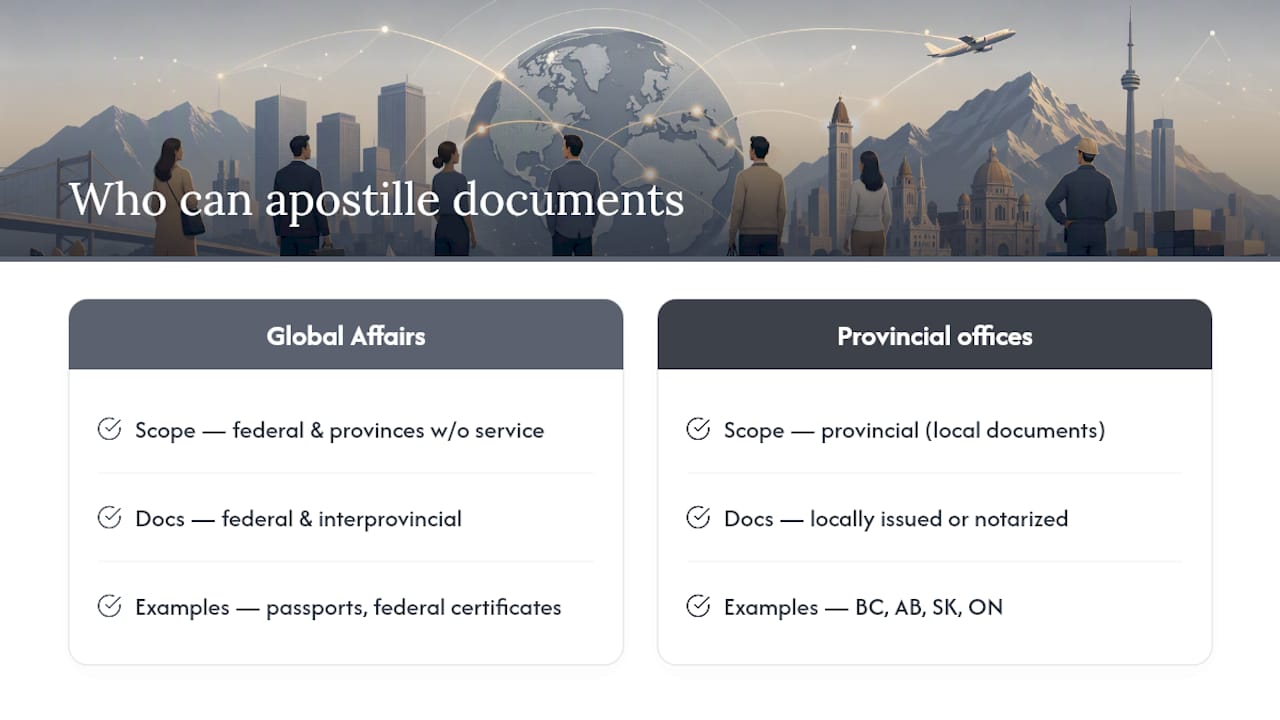
Who Can Apostille Documents in Canada?
Global Affairs Canada handles most federal documents and any province without its own service, while British Columbia, Alberta, Saskatchewan, and Ontario run their own authentication offices for locally issued or notarized paperwork.
How Can I Obtain an Apostille from the Government of Alberta?
Submit your original or notarized document to Alberta's provincial authentication service, since Alberta issues apostilles directly for documents originating or notarized within the province.
How Long Does It Take to Get an Apostille in Canada?
Processing time depends on the authority and submission method, with in-person drop-off generally faster than mail-in, and provincial offices often moving quicker than federal processing during busy periods.
How Can I Get an Apostille on a Document in Ontario?
Ontario runs its own authentication service for documents issued or notarized in the province, and Speedyapostilleservices can review your document and handle submission on your behalf.
Does a Corporate Bylaw Need Notarization Before It Can Be Apostilled?
Yes. Private corporate bylaws are not public documents, so a notary public must certify the copy before any authority will authenticate it with an apostille.