
Avoid Weeks of Delay: Apostille the Original or a Certified/Notarized Copy?
Avoid Weeks of Delay: Apostille the Original or a Certified/Notarized Copy? !
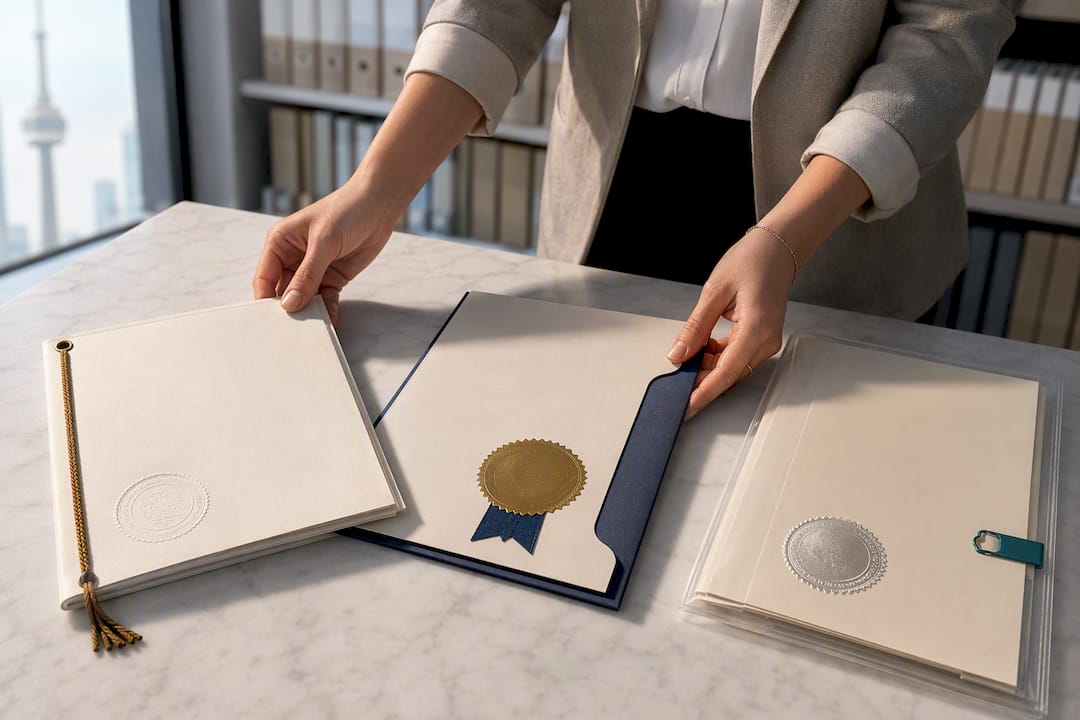
Avoid Weeks of Delay: Apostille the Original or a Certified/Notarized Copy?
An apostille can be issued on either an original document or a properly certified copy. Plain, uncertified photocopies cannot be apostilled under any circumstance. The apostille itself authenticates the signature and seal of whoever certified the document, not the document's content, and the country receiving your paperwork can still insist on the original regardless of what the issuing office allows.
TL;DR:
- Only original documents or properly certified copies can be apostilled; plain photocopies without certification are never eligible.
- An apostille authenticates a signature or seal of a public official but does not verify the document's content or accuracy.
- Vital records almost always require a certified copy directly from the issuing agency, not a notarized true copy, while court and police records often demand the original or agency-issued duplicate.
- When requesting a certified or notarized copy, ensure the proper authority signs, stamps, and includes all necessary elements like seals and signatures for the apostille process.
- Confirm the recipient country’s document requirements first to avoid submitting the wrong version or risking rejection, especially regarding original vs. certified copies.
Table of Contents
- What an Apostille Actually Verifies
- Document Rules: Original, Certified, or Notarized?
- How to Get a Certified or Notarized True Copy
- Your Apostille Submission Checklist
- Confirm the Recipient's Format Before You Submit
- What Actually Reduces Risk Here
- Getting Your Documents Apostilled Without the Guesswork
- Where to Verify These Rules Yourself
- Sources
- FAQ
What an Apostille Actually Verifies
An apostille is a certification issued under the Hague Apostille Convention that confirms a public official's signature, seal, or stamp is genuine. It does not verify that the information inside the document is true. It confirms that the person who signed or sealed it had the authority to do so.
That distinction explains why copies can qualify at all. When a registrar, court clerk, or notary certifies a copy, they are performing a public act, and that act is what gets authenticated. A photocopy with no certification carries no such act, so there's nothing for the apostille office to verify.
Three terms get confused constantly, and each means something different:
- Certified copy: the issuing agency itself reproduces the record and stamps it as a true duplicate.
- Notarized true copy: a notary compares a copy to the original and certifies, in their own statement, that it matches.
- Plain photocopy: an uncertified reproduction with no attached statement from anyone. Never eligible.
Global Affairs Canada and the U.S. Department of State both state the same baseline: submit an original or a certified copy, and make sure any required seals and signatures are present in original ink, not scanned or copied.
Document Rules: Original, Certified, or Notarized?
Requirements shift depending on what kind of document you're sending, and mixing up the categories is the fastest way to get your paperwork bounced back.
Vital records like birth, marriage, and death certificates almost always need a fresh certified copy ordered directly from the vital records office or registrar that issued the original. A notary generally cannot certify these, since Canadian guidance treats them as government-issued records that only the issuing authority can duplicate for apostille purposes.
Court and police records, including RCMP background checks, typically require either the original or a replacement issued directly by the same agency, bearing that agency's own seal. Notarized copies rarely satisfy this category.
Corporate and administrative documents, such as articles of incorporation, board resolutions, or business licenses, are often more flexible. Many jurisdictions accept an original or a notarized true copy, which lets a company keep its master record on file while sending a certified duplicate abroad.
Academic records, diplomas, and professional certificates fall somewhere in between. Some universities issue their own certified transcripts on request. Others allow a notary to certify a copy of the diploma. Acceptance ultimately depends on what the receiving institution or employer specifies, so check before assuming either format works.
How to Get a Certified or Notarized True Copy
Getting the right paperwork usually takes one of two routes, depending on the document.
- Request a certified copy from the issuing agency. Contact the vital records office, court clerk, or registrar directly. Most will stamp the reissued document with language like "certified true copy" along with a raised seal and an official signature, distinct from a photocopy stamp.
- Have a notary produce a true copy. Bring the original document to a notary public in person, or provide a clear printed scan if the jurisdiction allows remote notarization. The notary compares the copy to the original and attaches a certificate confirming they match.
- Check the notary's certificate for five elements: a statement that the copy is true and accurate, the notary's signature, printed name, official title, seal, and the date of certification. Missing any one of these can void the notarization.
- Confirm the notary has authority over that record type. Some jurisdictions bar notaries from certifying vital records, RCMP checks, or certain court documents outright. If that's your situation, you'll need to order an official replacement from the issuing agency instead.
Pro Tip: Call the notary's office before your appointment and ask specifically whether they've certified this document type for apostille purposes before. A notary experienced with routine copies isn't automatically familiar with international authentication requirements.
Your Apostille Submission Checklist
A rejected submission usually comes down to one missing piece, not a major error. Work through this before you mail anything:
- Confirm you have an original or a properly certified/notarized copy, never a plain photocopy, sitting on top of your paperwork pile.
- Attach a certified translation if the receiving country requires the document in a different language, keeping the translation separate from the apostille request itself.
- Complete the correct authentication or apostille request form, matching the step-by-step process that Global Affairs Canada outlines.
- Verify all fees are included and paid in the accepted method, since incomplete payment is a common cause of processing delays.
- Include the notary's certification page as part of the package if you're apostilling a notarized true copy, not just the copy itself.
- Use a trackable shipping method for both submission and return, especially when the item includes your only original.
Processing timelines vary by office and season, so build in a buffer if you're working against a hard deadline abroad.
Confirm the Recipient's Format Before You Submit
The apostille office can only verify what's in front of it. Whether the foreign recipient actually accepts a certified copy is a separate question entirely, and it's the one that trips people up most often.
Contact the receiving school, employer, bank, or consulate directly and ask, in writing, whether they require the original document or will accept an apostilled certified copy. Save that answer.
Common rejection triggers include:
- Submitting a plain photocopy instead of a certified or notarized version.
- Missing an original signature or raised seal where one is required.
- Getting the apostille from the wrong province, state, or national office relative to where the document was issued.
If the recipient explicitly demands the original, order an official replacement from the issuing agency if you don't want to part with the one you have, or ship the original itself using a secure, insured courier.
What Actually Reduces Risk Here
Confirm the recipient's format requirement first. If a notarized true copy is safe to send, use one and keep your original at home. If it isn't, either send the original with secure tracking or request an official replacement from the issuing agency before you do anything else. That order of operations helps avoid a common costly mistake in this process: apostilling the wrong version of a document you can't easily replace.
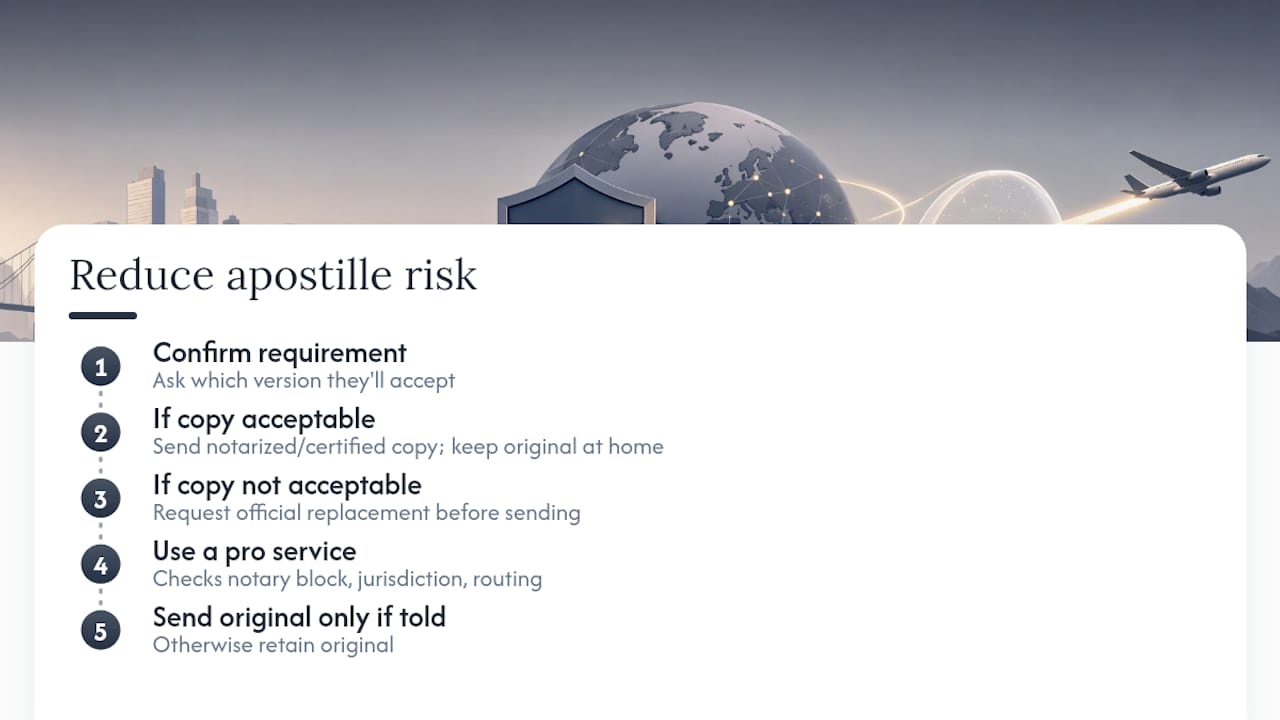
This is where a professional service earns its fee. Getting the notary block right, matching the document to the correct issuing jurisdiction, and routing the package to the right authentication office are all places where a single error costs weeks. Speedy Apostille Services reviews documents before submission, works with notaries familiar with apostille formatting, and reports typical turnaround of one to seven days depending on service tier.
Keep the original when a notarized or certified copy will satisfy the recipient. Send the original only when the recipient has told you, explicitly, that nothing else will do.
— Ken
Getting Your Documents Apostilled Without the Guesswork
Figuring out whether your birth certificate needs a fresh certified copy or whether your diploma can travel as a notarized true copy takes real research, and getting it wrong means starting over. Some services build research into the process itself: document review happens before submission, not after a rejection.

Some services handle notarization, certified-copy creation, and full apostille processing under one pricing structure that includes government fees upfront, so there's no surprise invoice after the fact. Turnaround times vary depending on how fast you need the document back. Start by working through the document checklist for your specific document type, then reach out through Speedyapostilleservices for a review of what you have and a clear answer on whether your copy will work or your original needs to travel.
Where to Verify These Rules Yourself
Apostille requirements can shift by jurisdiction and by document type, so confirm specifics directly with the relevant office before you submit anything.
- Document authentication requirements — Government of Canada
- Preparing a Document for an Apostille Certificate — U.S. Department of State
- Authentication services steps — Global Affairs Canada
- Verifying issuing authorities for legal documents — USDC
These offices set the fees, forms, and current processing rules, so treat them as the final word over any general guidance.
Sources
- Document authentication requirements — Government of Canada
- Preparing a Document for an Apostille Certificate — U.S. Department of State
- Authentication services steps — Global Affairs Canada
FAQ
Can I get an apostille on Canadian documents?
Yes. Canadian documents can be apostilled on the original or on a properly certified or notarized copy, provided plain photocopies aren't used and the correct issuing office handles the request.
What does an apostille look like?
An apostille is typically a stamped or attached certificate page with a title identifying it as an apostille, a reference number, the issuing authority's seal, and the date and signature of the official who issued it.
Can you apostille a copy of a document?
Yes, but only a certified copy from the issuing agency or a notarized true copy. An uncertified photocopy can never be apostilled.
Is a notarized copy the same as a certified copy?
No. A certified copy is issued by the original document's source, while a notarized copy is a reproduction a notary has compared against the original and certified as accurate.
Will the receiving country accept a certified copy instead of the original?
It depends entirely on that recipient's own policy. Confirm directly with the receiving school, employer, or agency before submitting, since some require the physical original regardless of what the apostille office allows.