
Apostille BC: How to Authenticate Your Documents
Apostille BC: How to Authenticate Your Documents ! Woman authenticating documents at home desk Yes, British Columbia documents can receive an apostille.

Apostille BC: How to Authenticate Your Documents
Yes, British Columbia documents can receive an apostille. Canada joined the Hague Apostille Convention, and as of January 11, 2024, authenticated B.C. documents receive an apostille certificate accepted in many member countries without additional consular legalization. For most B.C.-issued or B.C.-notarized documents, the competent authority is the B.C. Ministry of Attorney General through its Authentication Program. For federal documents, or when a destination country requires verification of a federal signatory, Global Affairs Canada is the required authority instead.
The immediate next step: identify whether your document is provincial or federal, confirm the destination country is a Hague Convention member, and check whether your notary is on file with the B.C. Authentication Program.
Three quick checks before you submit:
- Destination country: Confirm it is a Hague Convention member — apostilles issued in B.C. on or after January 11, 2024 are exempt from consular legalization for those countries only.
- Provincial vs. federal document: B.C.-issued or B.C.-notarized documents go to the B.C. Authentication Program. Federal documents go to Global Affairs Canada.
- Notary capacity: Documents must be signed by a B.C. Notary Public in their capacity as a notary public. Documents signed as a commissioner for taking affidavits are rejected. Many notaries hold both capacities, so the signing capacity on the document matters.
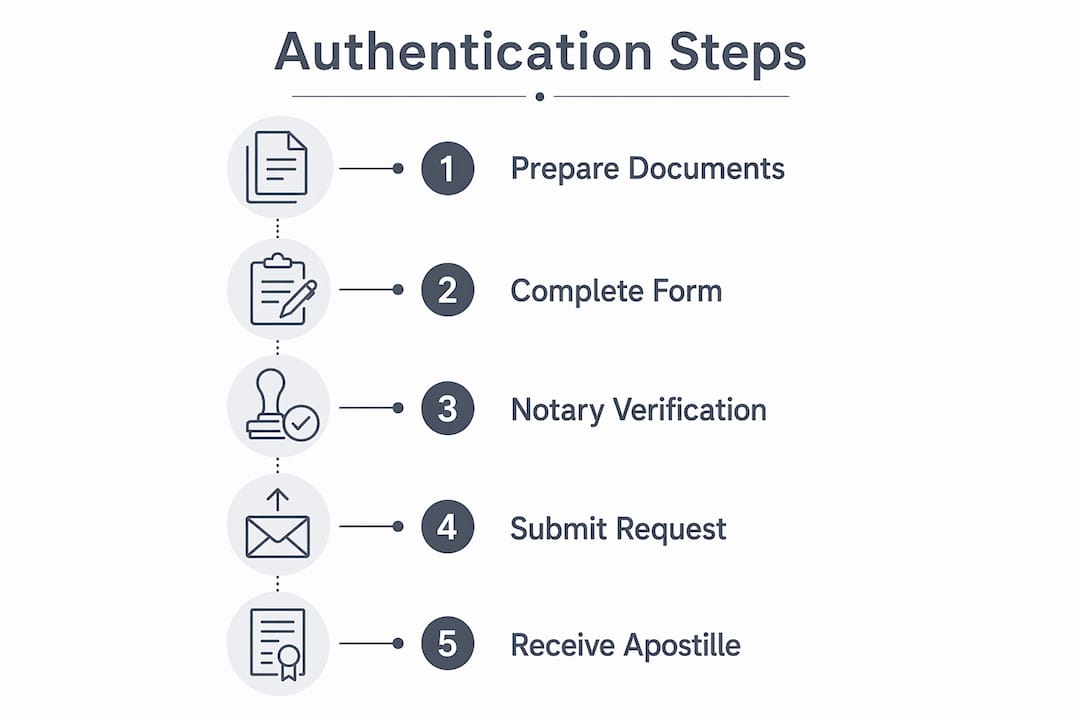
A completed B.C. Document Authentication Request form, signed and dated, must accompany every submission along with applicable fees. The apostille is physically riveted to the original document with a hole punch and rivet, which is a permanent alteration. If the original cannot be altered, obtain a certified true copy where the destination country permits it.
Pro Tip: If a notary is not already on file with the B.C. Authentication Program, processing can be delayed while the office verifies the notary's credentials. Confirm notary registration before submitting.

Even with a valid apostille, some embassies or consulates have additional submission requirements. Contact the destination embassy before sending documents to avoid rejection.
Table of Contents
Speedyapostilleservices handles the apostille process for you
Speedyapostilleservices, based in Toronto, manages the full apostille process for Canadian documents including birth certificates, marriage licenses, diplomas, transcripts, court documents, and RCMP background checks. The service covers document review to verify notary capacity, submission to the B.C. Authentication Program or Global Affairs Canada when required, and secure return of apostilled originals.
Pricing is all-in, with government fees included upfront. Turnaround tiers run from standard to expedited to rush, with a typical completion time of a few days. The service holds over 1,000 positive reviews and a 5.0 rating. Speedyapostilleservices also checks destination-country requirements as part of the document review, which reduces the risk of embassy-specific rejections. For documents going to countries that require apostille certification vs. consular legalization, the review step confirms the correct path before submission.
To start, submit documents through the Speedyapostilleservices booking page, confirm the notary is on file, and select a turnaround tier.
FAQ
What authority handles apostille BC requests?
The B.C. Ministry of Attorney General administers the B.C. Authentication Program and is the competent authority for B.C.-issued or B.C.-notarized documents. Federal documents require Global Affairs Canada.
When did BC start issuing apostilles?
The Hague Apostille Convention came into effect in Canada on January 11, 2024. Authentication certificates issued in B.C. on or after that date are called apostilles.
What notary type does BC accept for authentication?
Only documents signed by a B.C. Notary Public in their capacity as a notary public are accepted. Documents signed as a commissioner for taking affidavits are not eligible and will be rejected.
Can Speedyapostilleservices handle BC apostille documents?
Yes. Speedyapostilleservices manages document review, notary verification, submission to the B.C. Authentication Program or Global Affairs Canada, and secure return, with all-in pricing and a typical completion time of a few days.
Does an apostille replace embassy legalization?
For countries that are Hague Convention members, an apostille eliminates the need for additional consular legalization. Non-member countries still require the traditional legalization process through the embassy.